Monday, January 14, 2019

Caribou Coffee gets roasted, and memes are being used as code.


Dark Web ID Trends:Top Source Hits: ID Theft Forums (100%)Top Compromise Type: Domains
Top Industry: Legal
Top Employee Count: 
251 - 500 employees (50%)

United States - Caribou Coffee 
Below is a link to the notification published by Caribou regarding the affected locations: https://assets.coffeeandbagels-static.com/cariboucoffee/Data-Security-Notice.pdf
Exploit: Compromise of POS systems.
Caribou Coffee: A large coffee chain in the United States.
correct severe gauge
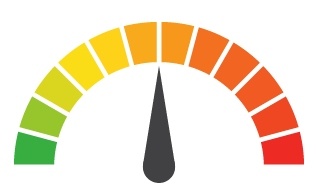
Risk to Small Business: 1.777 = SevereA breach of this magnitude would have a negative impact on any organization for a long time. Around 40% of the company’s locations were affected by the breach, with all cards used during the breach being considered accessed.
correct moderate gauge
Individual Risk: 2.428 = SevereThose affected by this breach are at an increased risk of identity theft. Those who used a credit or debit card at the organization between August 28, 2018, and December 3, 2018.
Customers Impacted: 239 of the organization’s stores were affected by the breach.

How it Could Affect Your Customers’ BusinessCredit card information being accessed is never good for business. Customers tend not to forget the company whose breach resulted in them losing money.
ID Agent to the Rescue: Spotlight ID™ by ID Agent offers comprehensive identity monitoring that can help minimize the fallout from a breach of this type.
Learn more:Learn more: https://www.idagent.com/identity-monitoring-programs
Risk Levels:1 - 1.5 = Extreme Risk1.51 - 2.49 = Severe Risk2.5 - 3 = Moderate Risk*The risk score is calculated using a formula that takes into account a wide range of factors related to the assessed breach.

Thursday, December 20, 2018

Quote of the Day


"Art, freedom and creativity will change society faster than politics." - Victor Pinchuk 

Monday, December 17, 2018

Quote of the Day

"I feel that there is nothing more truly artistic than to love people." - Vincent Van Gogh

Friday, December 14, 2018

Reminder: That Padlock Doesn’t Mean It’s Secure

Reminder: That Padlock Doesn’t Mean It’s Secure

We’ve mentioned this before, but the misconception has surfaced again, and it’s worth mentioning again. Looking for the padlock as a sign of a secure legitimate website isn’t an accurate indication that a site is malware free. Recent research indicates that nearly half of all phishing sites display the padlock and a web address that begins with https.

Data from PhishLabs show that 49% of all phishing sites in third quarter 2018 had the lock icon. This is up 25% from a year ago. Since a majority of users take “look for the lock” to heart, this new finding is significant. 80% of the respondents to a PhishLabs survey believed the lock indicated a legitimate and safe website.

Remind Employees, That Padlock Doesn’t Mean It’s Secure

Remind employees that the https portion of the address signifies that the data being transmitted is encrypted and so can’t be read by third parties. The padlock itself signifies nothing more than this. Its appearance may mean nothing more than that criminals are just lending some bogus credibility to their site.

John LaCour, chief technology officer for PhishLabs, said, “The bottom line is that the presence or lack of SSL doesn’t tell you anything about a site’s legitimacy.” More:
https://blog.knowbe4.com/reminder-that-padlock-doesnt-mean-its-secure

Tuesday, December 11, 2018

Attackers Impersonate CEOs to Scam Employees Into Sending Gift Cards for the Holidays

Attackers Impersonate CEOs to Scam Employees Into Sending Gift Cards for the Holidays

A crafty mix of social engineering, great timing, and context act as the perfect ingredients to trick unwitting users into buying gift cards and placing them into the hands of the attacker.

At the end of the year, nearly every company is thinking about holiday bonuses, corporate gifts, and holiday greeting cards for customers. So, it’s not unusual to think that the head of an organization might want to give out some gift cards to select employees at this time of year.

This all-too-common scenario is being taken advantage of by cybercriminals, according to the latest threat spotlight from security company Barracuda. Using simple impersonation tactics, the bad guys pose as the CEO asking an office manager, executive assistant, or receptionist to discreetly purchase some gift cards that will be used as gifts to employees.

Using well-researched personnel details, these cybercriminals are able to identify an appropriate individual to target, send them an email from the CEO’s supposed personal account, implying a sense of urgency to move the victim to act.

What makes these attacks so successful boils down to a few factors: 
  • They are filled with contextual goodness – these attacks get so many details right: the CEO’s name, the recipient selected, the time of year, and the reason for the gift card purchase. In an employee’s mind, this is all very plausible. 
  • There’s no malware – this is a malware-less attack, with no links or attachments for an AV or endpoint protection solution to spot. 
  • They leverage the power of the CEO – this is important. When the CEO says jump, generally people say how high? The fact that the request is coming from the CEO is usually sufficient motivation to make the recipient comply.
I can think of only two real ways to stop attacks like this:
  • Process – anytime a request is made to purchase something over a certain amount via email, a phone call should follow to verify the request. 
  • Education – users that continually go through security awareness training should spot this a mile away. The email details and the abnormality of the request are red flags to a user with an elevated security mindset. Users that step through security awareness training are educated on the scams run, tactics used, what to look for, and, generally, to maintain a state of vigilance when it comes to their interaction with email and the web.
This impersonation attack is simple but effective. Protect your organization by enabling your users to be the last line of defense in your security strategy before an attack like this hits.

CEO Fraud Prevention Manual Download

CEO fraud has ruined the careers of many executives and loyal employees. Don’t be next victim. This brand-new manual provides a thorough overview of how executives are compromised, how to prevent such an attack and what to do if you become a victim. Download at the KnowBe4 blog:
https://blog.knowbe4.com/attackers-impersonate-ceos-to-scam-employees-into-sending-gift-cards-for-the-holidays

Monday, December 10, 2018

Infrastructure Organizations Beware


According to the 2018 Verizon Data Breach Investigations Report, 29.2% of reported breaches happen in industries considered infrastructure. These industries include utilities, transportation, healthcare and others that use operational technology systems.

What can organizations that are considered infrastructure do to mitigate these risks? First, let’s take a look at what the risks are, and then how to secure your organization from them.

The first risk is the environment where the organization exists. If there is no inventory of the systems, a lack of security and a lack of understanding of what data is being used, the organization is at a major risk. In order to best combat this risk, one should start by gaining an understanding of overall security posture. If an organization is operating in multiple environments, pick a representative environment and apply what was learned to the other environments.

The second risk is patch management. This is self-explanatory, and its solution is as well. Patch your systems! Running outdated OT systems greatly increases the chance of a breach. Network Segmentation is the third risk, with many OT systems having connections between systems that should not be connected. In order to combat this, develop a plan for network segmentation, that way if one network is breached it is contained rather than spreading.

The fourth risk is the supply chain. It is very hard to control how organizations handle their data, which is why it is important to include security requirements when bringing on new systems, as well as continuing maintenance efforts within their vendor management programs. The fifth risk is a lack of a united front within the organization regarding security. To avoid this, one should foster cooperation and respect between the groups who address cyber threats. Training, communication and cooperation are key here.

With the world becoming increasingly digital, state actors are waging war behind the scenes more and more. A good example of this is Russia crippling Ukrainian infrastructure by launching a cyber-attack on power plants. All organizations are at risk for a cyber-attack, but those that are considered infrastructure should consider that the person trying to hack you isn’t necessarily some kid in his mom’s basement or even a pro hacker. It could be an intelligence agency with hundreds of well-trained specialists trying to see how your systems tick and how to break them.
https://www.darkreading.com/vulnerabilities---threats/vulnerabilities-in-our-infrastructure-5-ways-to-mitigate-the-risk/a/d-id/1333211